Alternative Energy Onboard – Exploring the Options
Key Takeaways for Alternative Energy Onboard
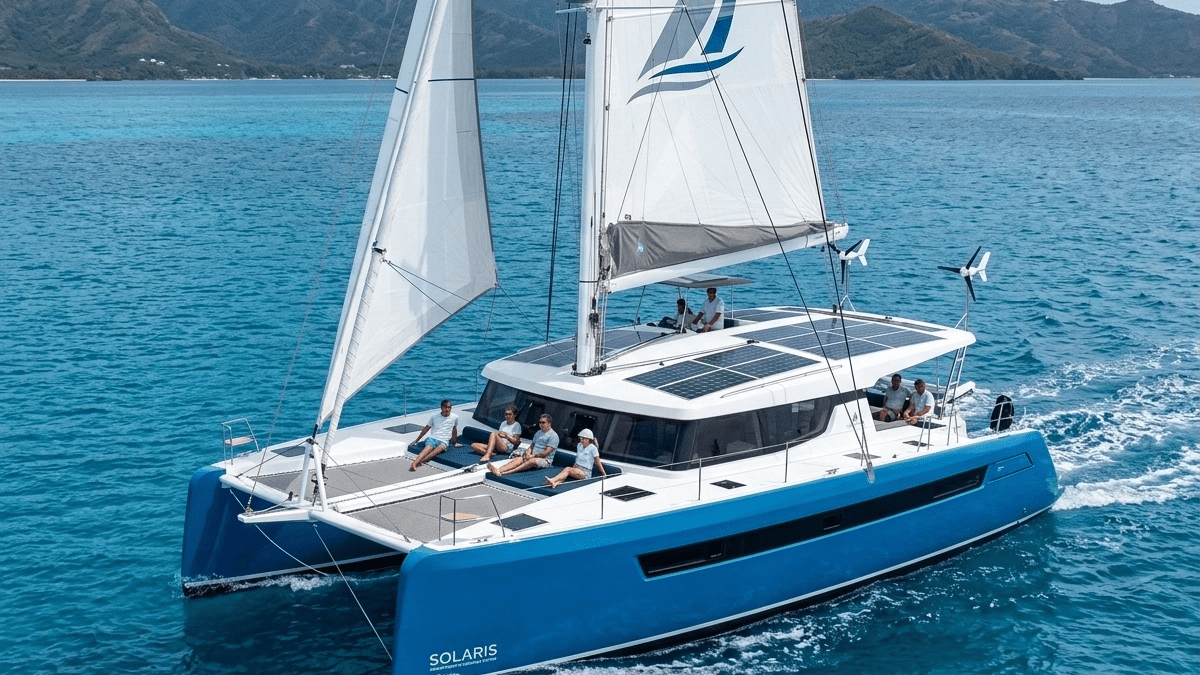
- Redundancy is Critical: Combining multiple energy sources—such as wind and solar—increases reliability and allows boaters to stay away from shore power for longer periods.
- Define Your Goals First: Before selecting a system, determine if you want to top up batteries, offset daily usage, or completely eliminate generator reliance.
- Solar Efficiency vs. Space: Solar is quiet and low-maintenance, but requires significant shadow-free "real estate" on deck; a 100W panel typically produces 33 amps per day in optimal conditions.
- Wind Power Consistency: Modern wind generators are quieter and more efficient than older models, capable of producing power 24 hours a day in areas with consistent breeze.
- Hydroelectric for Passagemaking: Hydro generators, like those from Watt & Sea, provide excellent power while underway, producing approximately 8 amps/hour at speeds of 5 knots or higher.
- Fuel Cells for Silent Automation: Systems like Efoy Comfort offer a "green," silent alternative to gas generators, automatically charging batteries when they run low, though they have a higher cost per amp.
- Location Matters: The best energy mix depends on your cruising grounds; for example, solar excels in the tropics, while wind and hydro are better suited for higher latitudes with consistent weather and frequent movement.
What are the different types of alternative energy sources?
Alternative energy sources include solar, wind, hydroelectric, and fuel cell. Each offers unique benefits and helps reduce reliance on fossil fuels. By harnessing these renewable resources, we can promote sustainability and combat climate change while providing cleaner energy for future generations. Embracing these alternatives is essential for a greener planet.
Every boater knows that redundancy onboard is a good idea – especially when it comes to keeping your batteries charged. With industry advancements, renewable energy options for onboard charging are not only vastly improved, but also becoming more affordable for boaters – so lets explore the pros and cons of adding Solar, Wind, Hydro or Fuel Cell technology to your boat.
What should you do before you start exploring alternative energy solutions?
The most important factor to help determine what alternative energy source will work best for you is to determine exactly what are you trying to accomplish. Are you trying to keep your battery bank topped up without plugging in to shore power? Are you trying to offset normal power systems usage while cruising without relying on a generator or engine? Or do you want to reduce your overall carbon emissions? Once you've determined what you're trying to do, you can figure out the number of amps you'll need to replace and which system (or combination of systems) will work best for that purpose.
Two additional aspects to consider are how you might install each system and what kind of weather conditions you're likely to experience where most of your cruising takes place. Installation limitations could easily make the decision for you.
By adding one (or more) alternative electricity production options onboard, you increase the reliability of your supply while potentially realizing substantial savings by not burning fuel with a genset to recoup the energy lost – so it's worth exploring. Plus you might even do a little to help offset climate change impacts. With that in mind, let's look at the pros and cons of each of the best renewable energy options currently available for boats.
Exploring Solar Power Energy Onboard
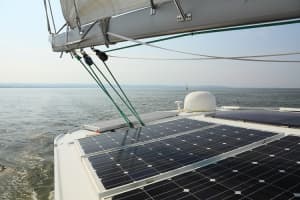
Solar energy systems are a clean and renewable source of energy that harness sunlight to generate electricity, making it a crucial component in the transition to sustainable energy solutions. Over the last decade, the cost of installing solar power on a boat has dropped substantially, while the efficiency of panels and monitoring has greatly improved, and installation has never been easier – making it a highly feasible option for many boaters. Once installed, solar panels quietly convert sunlight into electrical current – putting amps into your batteries and replacing the amps you've used with almost zero interference.
What's the downside? Mainly finding enough real estate onboard to create the total capacity needed. If you're just interested in topping up the batteries – solar is a great option, but if you want to replace all the amps you're using while cruising – you'll be needing a fair amount of space for large panels, and that space should be shadow-free throughout the day to keep the panels at their most efficient. For a more in depth look at installing solar – check out our Solar Power Basics article.
| Solar Power Pros | Solar Cons |
|---|---|
| Works at anchor or underway | Only effective for part of the day |
| With optimal conditions a 100W panel will produce 33 amps/day | Small amounts of shading can greatly affect efficiency |
| Low maintenance | Can take up a lot of space |
| Long lasting | Less efficient the hotter they get |
| Safe operation | More capacity equals more panels |
| No noise | Needs air circulation for efficiently |
Looking at Wind Generator Power
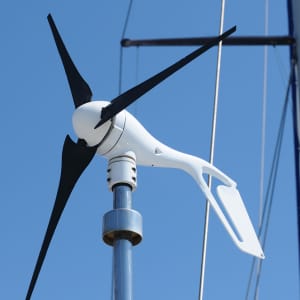
Harnessing the wind to create power has been around for over a thousand years – so the idea is not exactly new. With fields of wind farms cropping up world-wide, it's not surprising that it makes sense to harness wind energy on our boats too, and marine wind generators have come a long way from the high-pitched noise makers that originally entered the market. These days, technology has improved bringing smoother rotation and lightweight carbon blades – which equals far less noise along with increased efficiency of production, even in lighter winds. If you live and cruise in an area where winds are consistent – you could potentially be creating energy 24 hours a day.
| Wind Power Pros | Wind Cons |
|---|---|
| Can produce power 24 hours a day | Can vibrate at certain wind speeds |
| Long lasting | Can be noisy |
| Low maintenance | Potential danger of blades |
| Works at anchor or underway | No production in a calm anchorage |
| Produces a lot of capacity in high winds | Low power generation sailing downwind |
What exactly is Hydro Power?
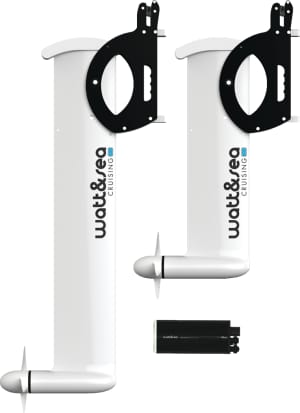
A newer player on the alternative energy marine market are Hydro generators, such as those made by Watt & Sea. The idea with Hydro (water) power is to create energy by towing something that spins as water moves past it, while creating the least amount of drag possible. Most Hydro units are fastened to the transom of the boat and can be deployed or stowed depending on the power generation needs. The faster the boat moves through the water, the more amps the generator produces – but you'll want to be cruising at a minimum of 5 knots to get meaningful capacity production (the Cruising 600 model will produce 8 amps/hour at 5 knots of cruising speed – but at 8 knots it will produce almost double that). If you have a small boat and travel under 4 knots, Hydro power is not the option for you – but if you normally cruise in the 5-8 knot range, it's definitely worth considering.
| Hydro Power Pros | Hydro Cons |
|---|---|
| Excellent power generation underway | Power production underway depends on boat speed |
| Minimal drag at higher speeds | No power generation at anchor |
| Stows neatly when not in use | More expensive than solar or wind power |
| Silent operation | Vulnerable to damage |
| Higher maintenance |
New to the Game - Fuel Cell Power
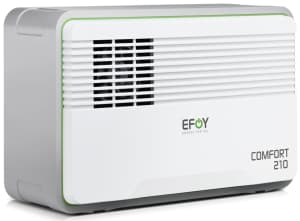
Finally – the newest alternative energy option for boaters is a fuel cell generator by Efoy Comfort. Like a gas or diesel generator, the Efoy can come on automatically and charge as much as you need it before shutting off again – all on its own. But unlike those generators, there is virtually zero noise or heat produced – and the by-products of running it are water and carbon dioxide – making it a very “green” way to generate power. Empty fuel canisters can even be recycled!
The only real downside of Fuel Cell technology is the price for the amount of power it produces – which can be as low as 3.3 amps per hour, or as high as 8.8 amps/hour depending on the unit you choose. For those boaters that have smaller power needs, the Efoy is an excellent option – running quietly in the background with very little maintenance or attention – whether it's sunny, raining, windy or calm. But if you're looking to replace more than 150 amps a day while at anchor, the unit will be running almost constantly and you'll potentially go through “fuel” quickly – making it a more expensive option over the long run. For a more in-depth look read our Efoy Technology article.
| Fuel Cell Power Pros | Fuel Cell Cons |
|---|---|
| Clean burning, by-products are water and carbon dioxide | Maximum capacity of 80-250 amps/day depending on unit size |
| Automatically starts and charges when batteries get low | Slow amp hour production (3.3 – 10.4 amps per hour) |
| Very quiet | Need to carry/store “fuel” |
| Easy installation | Fuel available in limited locations |
| Can run 24/7 if needed | Most expensive option per amp |
| Runs efficiently at any temperature | |
| Low maintenance |
How Do I Decide what the Best Choice for Power Redundancy Onboard Is?
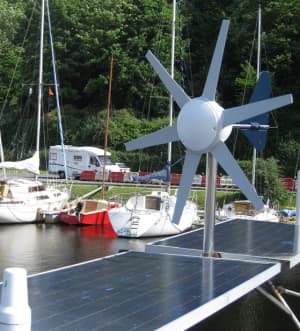
Alternative energy sources, such as solar, wind, fuel cell and hydroelectric power, all play an important role in reducing our dependence on fossil fuels. They help reduce greenhouse gas emissions, promote environmental sustainability, and they help us transition away from fossil fuels to create a sustainable future. So what's the best renewable energy resource for your boat?
At the end of the day, the decision depends on the kind of boating you do and where you do it. Are you cruising in the Northwest where there's a fair amount of cloudy days, but good wind and lots of moving from anchorage to anchorage? Or are you in the tropics where there's a ton of sun but you could stay in one spot for weeks? Most likely, the perfect installation will be a mixture of the options above – such as wind AND solar power, or solar AND fuel cell – ensuring you can stay away from the dock for as long as you like.
Frequently Asked Questions
What alternative energy sources are available for charging my boat's batteries?
There are four main renewable energy options for onboard battery charging: solar, wind, hydroelectric (hydro), and fuel cell technology. Solar panels quietly convert sunlight into electrical current using photovoltaic cells. Wind generators harness wind energy. Hydro generators produce power from water moving past the hull while underway. Fuel cells, such as the EFOY, use Direct Methanol Fuel Cell (DMFC) technology to generate electricity cleanly and silently from methanol. Each option has unique pros and cons depending on your boating style and location.
How do I know which alternative energy source is right for my boat?
The best choice depends on where and how you boat. If you cruise in the Pacific Northwest with frequent cloudy days but consistent wind, a wind generator or combined wind-and-solar setup may suit you best. If you spend time in sunny, tropical anchorages, solar alone might suffice. For boaters with smaller, consistent power needs who want a quiet, low-maintenance solution regardless of weather, a fuel cell like the EFOY is an excellent option. In most cases, a combination — such as solar plus wind, or solar plus fuel cell — provides the most reliable, well-rounded energy independence.
What components do I need for a complete marine solar power system?
A complete marine solar system includes:
- Solar panels (rigid or flexible)
- A solar charge controller
- A battery bank
- Marine-grade wiring and connectors
A charge controller — ideally an MPPT (Maximum Power Point Tracking) type — regulates current flow to prevent overcharging and maximizes energy harvest from your panels. Some MPPT controllers also offer Bluetooth monitoring so you can check your system remotely via smartphone. Rigid panels generally offer higher efficiency (~22%), while flexible panels can conform to curved surfaces like cabin tops and biminis, making them ideal for sailboats or boats with limited flat deck space.
What are the pros and cons of fuel cell technology like the EFOY for marine use?
EFOY fuel cells run quietly in the background with very little maintenance, producing electricity regardless of weather — sunny, rainy, windy, or calm. They emit only water vapor and a small amount of CO₂, making them a clean option. Output ranges from approximately 3.3 to 8.8 amps per hour depending on the model. The main downside is cost relative to power output: if you need to replace more than 150 amps per day at anchor, the unit will run almost continuously and consume methanol fuel at a higher rate, increasing long-term operating costs. For smaller power needs, the EFOY is an efficient, hands-off solution.
We hope you've found this article helpful, but if you need more information, please don't hesitate to give our knowledgeable staff a call at (800) 426-6930.