Clean and Quiet Power: Explore Marine Fuel Cell Generators & Accessories at Fisheries Supply
Overview and buyer’s guide for boaters, DIYers, and yard pros evaluating direct-methanol fuel cell (DMFC) battery-charging systems for marine use.
Key takeaways
- Quiet, continuous battery charging with low local emissions.
- Automated charging controller protects battery health.
- Low maintenance; few moving parts reduce service needs.
- Methanol cartridges are compact; easy onboard storage.
- Ideal for anchoring, passagemaking, and hybrid solar setups.
Marine Fuel Cells: What They Are and How They Work
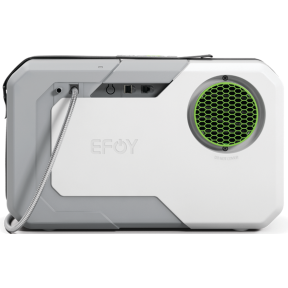
A marine fuel cell—specifically a direct-methanol fuel cell (DMFC)—uses methanol fuel to generate electricity through an electrochemical reaction rather than combustion. In a DMFC, a polymer electrolyte membrane enables proton transfer; the cell outputs DC power to charge batteries. Byproducts are primarily water vapor and carbon dioxide, with no soot and minimal odor compared to small combustion generators.
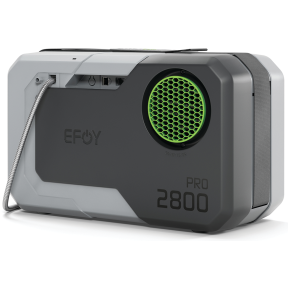
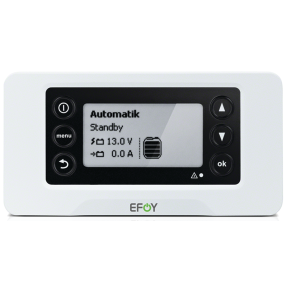
EFOY systems from SFC Energy are widely used for marine house-bank charging and hybrid power. They operate automatically, turning on when battery voltage drops and off when the bank is recharged.
Why Boat Owners Choose Fuel Cells
- Clean operation: Low local emissions and no combustion particulates at point of use.
- Quiet performance: Electrochemical generation reduces noise compared with small combustion gensets; ideal for night charging at anchor.
- Efficient battery charging: Integrated charge control optimizes DC charging and reduces cycling stress, extending battery life.
- Low maintenance: Few moving parts minimize routine service.
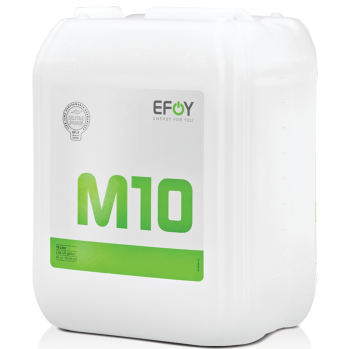
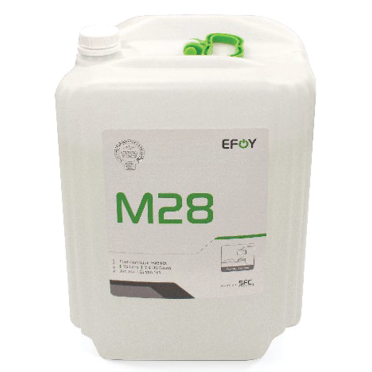
- Compact fuel logistics: High-purity methanol in sealed cartridges simplifies storage and handling.
Fuel Quality & Safety Notes
Use only manufacturer-approved methanol cartridges. For broader context, marine guidance continues to evolve: the IMO publishes interim safety guidelines for methyl/ethyl alcohol fuels, and ISO has issued a methanol marine fuel quality standard that also references fuel cell use cases.
- Ventilation & exhaust: Install per the manual; route exhaust/condensate outside the cabin.
- Cartridge handling: Secure upright; follow SDS and labeling (e.g., UN1230).
- Placement: Mount away from ignition sources; protect from spray and flooding.
Note: Standards and local regulations can change; consult the current manual and applicable rules for your boat class and operating area.
Sizing & Integration (DC Systems)
Size the fuel cell by daily energy demand (Ah/day) and required autonomy between cartridge changes. Many cruisers use fuel cells primarily to keep the house bank charged while at anchor, pairing with solar to reduce cartridge use.
- Duty profile: Continuous low-noise charging vs. intermittent high-power AC loads.
- Battery chemistry: Compatible with AGM, Gel, and many LiFePO4 systems—verify charge profiles.
- Hybrid setups: Combine with solar; fuel cell fills in during low irradiance or high hotel loads.
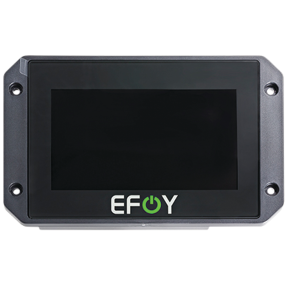
- Automation: The integrated controller starts/stops based on battery state of charge, helping prevent over- and under-charging.
Shop EFOY Marine Fuel Cells & Accessories
For more information on how clean fuel cell power generation works, read our article on EFOY products – or browse our complete line of EFOY fuel cell solutions
Frequently Asked Questions
What are the advantages of using a fuel cell generator on my boat?
Quiet, automated battery charging with low local emissions, fewer moving parts, and reduced maintenance compared to small combustion generators.
How do I install a fuel cell generator on my boat?
Follow the manufacturer’s installation manual: mount in a ventilated space, route exhaust/condensate overboard, connect to the DC bank with proper wire sizing and circuit protection, and secure the methanol cartridge. Professional installation is recommended.
What type of fuel is required for EFOY fuel cell generators?
High-purity methanol (approved EFOY cartridges). Handle per SDS and label instructions.
Can a fuel cell power all my boat’s electrical needs?
Fuel cells excel at steady DC charging. For high-draw AC appliances (e.g., electric cooking, air conditioning), plan to use an inverter/charger, shore power, or an auxiliary genset. Match fuel cell output to your average daily consumption.