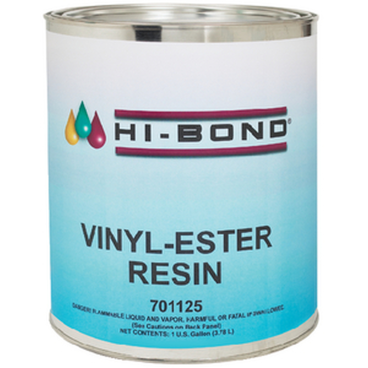
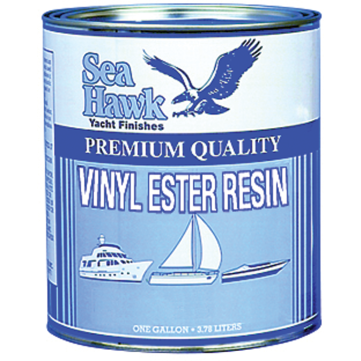
Vinyl Ester Resins from Fisheries Supply
This page helps boat owners, repair yards, and composite technicians select and use vinyl ester resin for marine composites, with trusted sources and practical guidance.
Key Takeaways
- High corrosion and water resistance suits below-the-waterline and chemical-exposure zones.
- Balanced choice between polyester (cost) and epoxy (performance) for many marine laminates and repairs.
- Excellent bonding to fiberglass fabrics; typically catalyzed with MEKP per manufacturer specs.
What Is Vinyl Ester Resin?
Vinyl ester resin (often “vinyl ester”) is produced by reacting an epoxy resin with acrylic or methacrylic acids, then dissolved in a reactive monomer such as styrene for curing. It offers mechanical performance between polyester and epoxy, with notably lower water uptake than typical polyesters.
Top Features of Vinyl Ester Resin
- Superior chemical resistance vs. many polyesters in acids, alkalis, and solvents — a reason it’s widely used in FRP tanks.
- Excellent water resistance and hydrolytic stability for continuous immersion and osmotic blister mitigation.
- High durability, with impact and thermal-shock performance better than typical polyesters.
- Versatile application above and below the waterline.
Marine Applications & Use Cases
Typical uses include below-waterline laminates, osmosis/blister repairs, bilge areas, structural reinforcements with fiberglass, and corrosion-prone compartments such as tanks and sumps. Its combination of toughness and chemical resistance promotes long service life in these environments.
Vinyl Ester Fiberglass Resin
Pairing vinyl ester with fiberglass reinforcement yields a composite offering strong interlaminar bonding and improved resistance to water absorption compared with many polyester laminates — helping maintain laminate integrity.
- Enhanced structural performance with woven, biaxial, or triaxial fabrics.
- Improved blister resistance for hulls and underwater appendages.
Vinyl Ester vs. Polyester vs. Epoxy (At a Glance)
| Resin Type | Properties |
|---|---|
| Vinyl Ester | Balanced cost/performance; low water uptake; excellent chemical resistance; MEKP cure; common for hull blister work. |
| Polyester | Lowest cost; adequate for non-critical parts; higher water absorption; less corrosion resistance. |
| Epoxy | Highest strength/adhesion; premium cost; amine cure; excellent mechanicals but different handling and compatibility constraints. |
Handling, Catalysis & Compatibility
- Initiation — follow the product’s MEKP catalyst ratio and temperature window; verify gel and cure times in the TDS.
- Reinforcements — bonds well to fiberglass cloth and mat; confirm with fabric supplier and resin manufacturer.
- Post-cure — observe recommended schedules to achieve full chemical resistance before immersion.
Trusted Marine Brands Available at Fisheries Supply
We stock vinyl ester solutions from leading manufacturers — with nationwide/worldwide shipping available (HAZMAT shipping rules permitting).
- Evercoat — see product TDS for mixing, cure, and compatibility details.
- Sea Hawk Yacht Finishes — vinyl ester options used as water barriers and structural laminates in demanding builds.