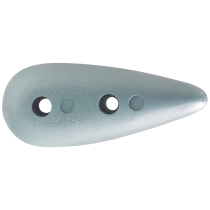
Marine Sacrificial Anodes ("Boat Zincs") for Shafts, Engines, and Rudders
Marine sacrificial anodes protect propellers, shafts, trim tabs, heat exchangers, outboards, outdrives, rudders, struts, and bonded hull fittings from galvanic corrosion. This category is for boaters selecting zinc, aluminum, or magnesium anodes for saltwater, brackish water, or freshwater.
What Marine Sacrificial Anodes Do
A sacrificial anode is a replaceable metal component designed to corrode before more valuable underwater hardware. When dissimilar metals are immersed in seawater, brackish water, or freshwater, galvanic current can attack propellers, shafts, through-hulls, trim tabs, outdrives, and heat exchangers. Zinc, aluminum, and magnesium anodes provide cathodic protection by becoming the more active metal in the corrosion circuit.
Correct anode selection depends on water conductivity, vessel metals, bonding systems, installation location, and manufacturer specifications. Recognized marine practices include ABYC E-2 cathodic protection guidance and alloy specifications such as MIL-DTL-18001 for zinc sacrificial anodes.
Shop Common Boat Anode Types
Marine anodes are sold in several formats because different underwater components require different shapes, fasteners, contact surfaces, and alloy materials.
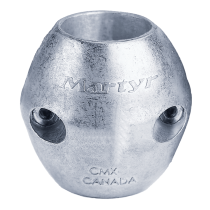
- Shaft Anodes: Shaft anodes are split-ring collars that clamp around propeller shafts. They help protect stainless steel shafts, propellers, couplings, and nearby running gear when installed with clean metal-to-metal contact.
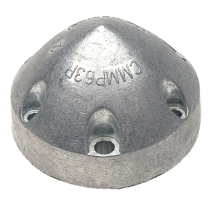
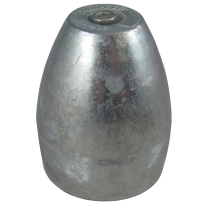
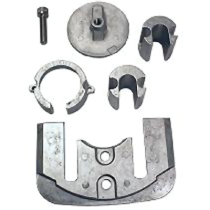
- Outboard and Outdrive Anodes: Outboard and outdrive anodes are engine-specific corrosion protection parts used on lower units, gearcases, transom brackets, cavitation plates, and sterndrive assemblies. Common fitments include Yamaha, Mercury Marine, Volvo Penta, and other major marine engine brands.
- Trim Tab Anodes: Trim tab anodes help protect trim tabs, fasteners, brackets, and adjacent bonded metal hardware. They are commonly replaced during haul-outs, bottom maintenance, and seasonal corrosion inspections.
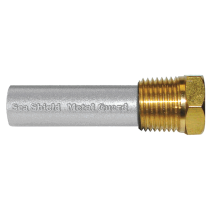
- Pencil Anodes: Pencil anodes protect heat exchangers, oil coolers, engine blocks, manifolds, and raw-water cooling passages. They are small threaded anodes that should be inspected regularly because they can be consumed quickly in active cooling systems.
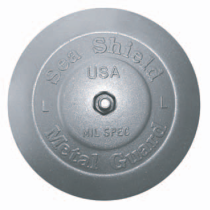
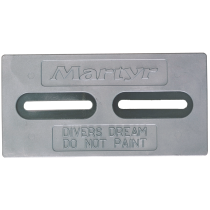
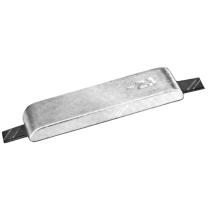
- Hull and Strap Anodes: Hull and strap anodes protect bonded underwater hardware such as rudders, struts, through-hulls, skegs, and metal fittings. They are often used on larger vessels or systems where multiple components are connected through a bonding network.
Related category: boat propellers and hub kits.
Choose Anode Material by Water Type
The most important buying decision is matching anode alloy to the water where the boat operates. Using the wrong anode material can cause poor protection, rapid consumption, passivation, or unnecessary metal loss.
| Water Type | Recommended Anode Material | Best Use | Notes |
|---|---|---|---|
| Saltwater | Zinc or aluminum | Offshore passages, coastal cruising, sailboats, powerboats, outboards, outdrives, shafts, propellers, trim tabs | Zinc is a traditional saltwater choice. Aluminum can also perform well in saltwater when the alloy is designed for marine cathodic protection. |
| Brackish water | Aluminum | Estuaries, tidal rivers, marinas with changing salinity, boats moving between saltwater and freshwater | Aluminum anodes often provide more consistent protection across fluctuating salinity and conductivity. |
| Freshwater | Magnesium | Lakes, inland rivers, freshwater cooling exposure, low-conductivity environments | Magnesium provides higher driving voltage in freshwater. Zinc and aluminum may become less effective in low-conductivity water. |
Installation and Maintenance Guidelines
- Install Anodes with Clean Metal Contact: Anodes must make direct contact with the protected metal or bonding system. Remove paint, oxidation, scale, and debris from the contact area before installation. Tighten fasteners securely so vibration, water flow, and shaft movement do not loosen the anode.
- Place Anodes Where They Stay Submerged: Anodes should remain underwater and exposed to water flow during normal operation. Placement should allow protective current to reach the intended metal components without being blocked by coatings, insulating materials, marine growth, or poor bonding continuity.
- Inspect and Replace Anodes Regularly: Inspect boat anodes during haul-outs, diver maintenance, engine service, and seasonal checks. Replace anodes when they are roughly 50 percent consumed, when they are loose, when they show uneven wear, or when the protected component shows signs of active corrosion.
Marine Corrosion Standards and Technical Considerations
- ABYC E-2: Provides marine cathodic protection guidance for boats, including concepts related to bonding, potential measurements, and protection criteria.
- MIL-DTL-18001: Defines composition and performance requirements commonly associated with sacrificial zinc alloy anodes.
- Galvanic corrosion: Occurs when dissimilar metals are electrically connected in an electrolyte such as seawater, brackish water, or freshwater.
- Passivation: A condition where an anode surface forms an oxide layer and stops providing effective protective current.
- Overprotection: Can occur when an anode material is too active for the system, potentially causing coating damage or excessive anode consumption.
Frequently Asked Questions
What are boat zincs used for on a boat?
Boat zincs are sacrificial anodes used to protect underwater metal parts from galvanic corrosion. Zinc, aluminum, or magnesium anodes corrode before propellers, shafts, trim tabs, rudders, heat exchangers, outdrives, and through-hulls, helping preserve expensive marine hardware in saltwater, brackish water, or freshwater.
Which sacrificial anode material should I use in saltwater?
Zinc or aluminum sacrificial anodes are commonly used in saltwater. Zinc is the traditional choice for high-salinity seawater, while aluminum anodes can provide effective protection in both saltwater and brackish water when the alloy is designed for marine cathodic protection applications.
Are magnesium anodes better for freshwater boats?
Magnesium anodes are usually the preferred choice for freshwater boats. Freshwater has lower electrical conductivity than seawater, so magnesium provides the higher driving voltage needed to protect metal parts such as shafts, outdrives, rudders, heat exchangers, and bonded hull fittings.
When should I replace marine sacrificial anodes?
Marine sacrificial anodes should be replaced when they are about 50 percent consumed. Replacement is also recommended when an anode is loose, painted, passivated, heavily coated with buildup, unevenly worn, or no longer making clean electrical contact with the protected metal surface.
Can I paint over boat anodes during bottom painting?
Boat anodes should never be painted because paint blocks the electrical current required for cathodic protection. Sacrificial anodes need direct exposure to the surrounding water and clean metal-to-metal contact with the protected component or bonding system to function correctly.
How do I choose the correct shaft anode size?
Choose a shaft anode by matching the propeller shaft diameter, anode material, and operating water type. The split collar must clamp tightly around clean bare metal without slipping. Confirm the sizing, fastener type, and clearance around the propeller, strut, and coupling.