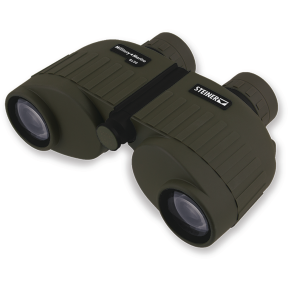
Marine Binoculars for Boating " Fishing: Expert Buyer’s Guide
Key takeaways
- For most skippers, 7×50 binoculars offer the best balance of stability, field of view, and low-light performance at sea.
- Prioritize waterproof, fog-proof (nitrogen-purged, O-ring sealed) construction and grippy rubber armor.
- A built-in analog bearing compass and optional rangefinder reticle improve navigation and situational awareness.
- Image stabilization helps in heavy chop but adds cost and weight; it’s common on higher-end models.
Why Marine Binoculars Matter for Safe Navigation
A proper visual lookout is required by the Inland Navigation Rules, Rule 5, which states that every boat must maintain a lookout by sight and hearing using all available means to assess risk of collision. Quality binoculars are a practical tool to meet that obligation and to identify aids to navigation, traffic, debris, and weather changes..
Core Features of Marine-Grade Binoculars
- Waterproof & fog-proof housing — Prefer nitrogen-purged internals and O-ring seals for reliable performance in spray and temperature swings.
- Rubber armor — Improves grip and shock resistance in wet decks and foul weather.
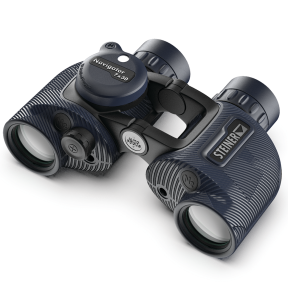
- Built-in compass (select models) — An analog bearing compass lets you take headings to targets; some add an illuminated card for night use.
- High-quality optics — Fully multi-coated glass with Porro prisms yields wide field of view and bright images in twilight.
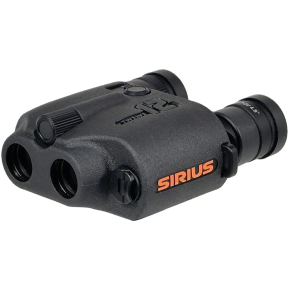
- Image stabilization (premium) — Mitigates boat motion for steadier views when scanning in swell.
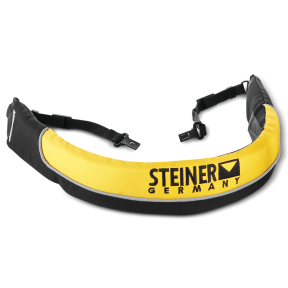
- Floating straps & protective cases — Add buoyancy and protection; many models float when paired with the strap.
Why 7×50 is the Maritime Sweet Spot
The 7× magnification keeps images steady aboard moving boats, while 50 mm objective lenses admit ample light for dusk/dawn scanning. This configuration has long been favored by professional mariners for balancing stability, field width, and low-light performance.
- Field of view: wide enough to acquire targets quickly.
- Exit pupil: ~7 mm supports brighter twilight views.
- Stability: lower shake than higher-power glasses underway.
How to Choose the Right Marine Binoculars
Optical specs
- Magnification × objective size: 7×50 for most skippers; 8× or stabilization if you operate in calmer waters and want more reach.
- Eye relief: 15–20 mm if you wear glasses.
- Focus system: individual focus (IF) is durable and set-and-forget for distance viewing; center focus (CF) is faster if you often view at varying ranges.
Durability & sealing
- Look for nitrogen purging, O-ring seals, and IPX7/8 water ingress resistance claims.
Navigation aids
- Integrated compass: choose an analog, stabilized card with illumination and ±0.5° typical accuracy on quality models.
- Rangefinder reticle: enables quick size/distance estimates.
Ergonomics
- Non-slip armor, balanced weight (~1–1.4 kg on premium, ~900 g on lightweight polycarbonate).
- Glove-friendly controls; lanyard points for floating straps.
Trusted Brands & Notable Models at Fisheries Supply
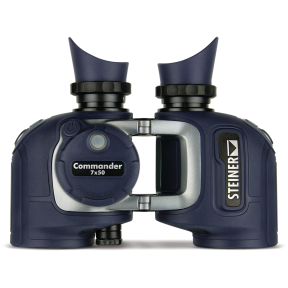
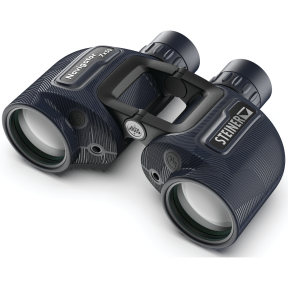
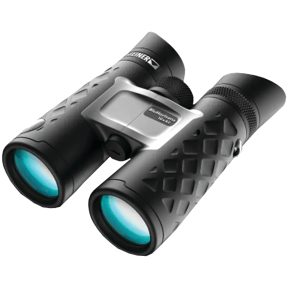
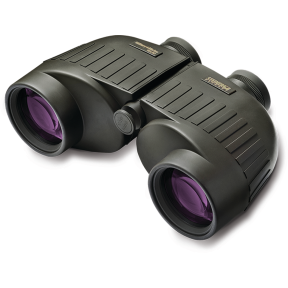
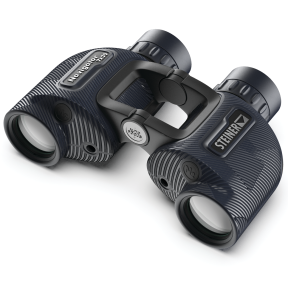
- Steiner Commander 7×50c — High-definition optics with a precise, large-diameter analog compass and illuminated reticle; engineered for professional duty.
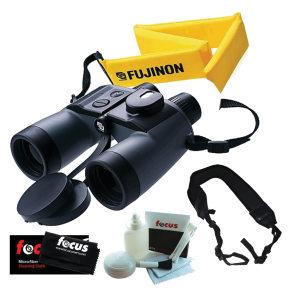
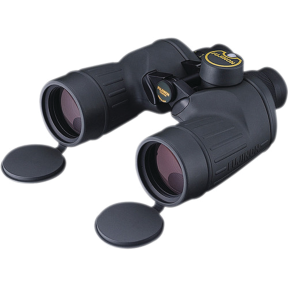
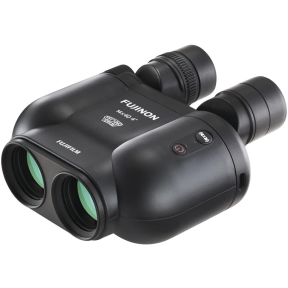
- Fujinon Mariner XL 7×50 — Lightweight polycarbonate body with long eye relief; available with or without built-in compass; floats with strap attached.
Round out your kit with marine compasses and navigation charts for accurate situational awareness.
Care & Accessories
- Floating strap to keep binoculars recoverable overboard.
- Hard case or dry bag for transport and deck stowage.
- Lens cloth — avoid salt abrasion; rinse with fresh water after exposure.
- Desiccant packs in the case to reduce moisture.
Shop Marine Binoculars with Confidence
Fisheries Supply offers a large in-stock selection of marine optics and accessories and provides nationwide and international shipping so you can outfit your boat wherever you operate.
Frequently Asked Questions
What magnification is best for boating?
7×50 is the maritime standard for general use thanks to stability and brightness underway. Go stabilized if you need more power in rough seas.
Do I need a built-in compass?
For navigation and bearing fixes, a built-in, illuminated analog compass with a reticle is highly useful. It’s optional for casual wildlife viewing.
Are waterproof ratings important?
Yes. Choose nitrogen-purged, O-ring-sealed binoculars with proven immersion resistance to avoid internal fogging.
Why do pros favor Porro prisms?
Porro designs typically offer wider field of view, better stereopsis (depth perception), and excellent value in marine use.
What about charts and electronic navigation?
Binoculars complement (not replace) NOAA charts and electronic navigation. Rule 5 still requires an effective visual lookout.