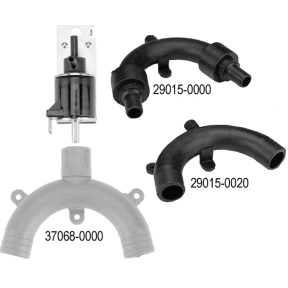
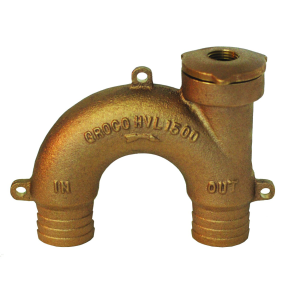
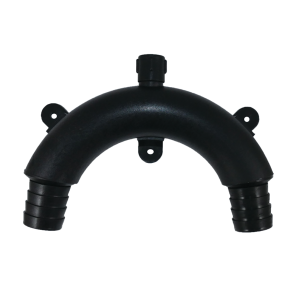
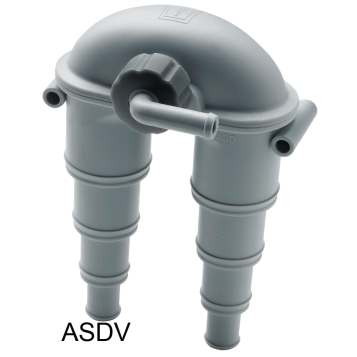
Marine Anti-Siphon Valves atFisheries Supply
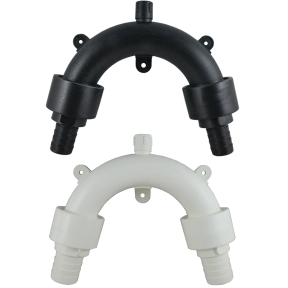
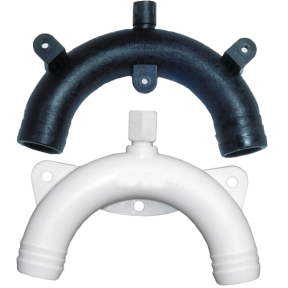
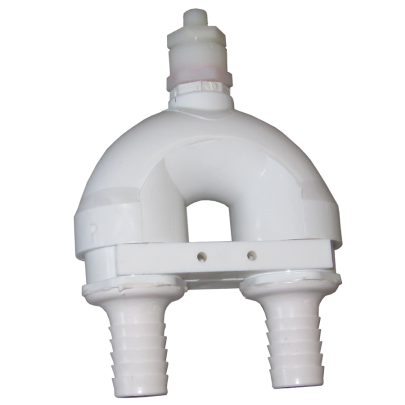
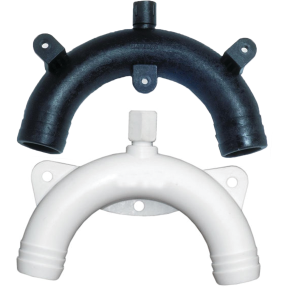
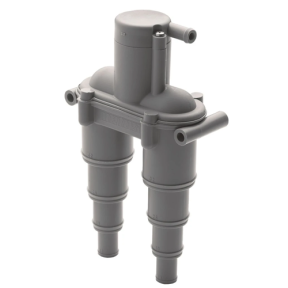
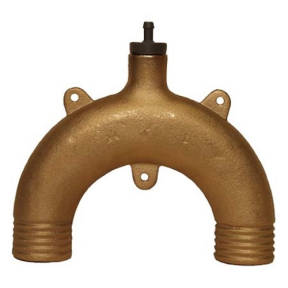
Marine plumbing systems rely on purpose-built components to operate safely and predictably. One of the most important is the boat anti-siphon valve, commonly referred to as avented loop. This device allows air to enter the line at a controlled point, breaking any unintended siphon and maintaining proper flow direction.
What to Know
- Vented loops break siphons by introducing air into plumbing lines
- They are critical for systems installed below the waterline
- Common uses include toilets, cooling systems, and bilge pumps
- Correct selection and placement improve safety and reliability
Fisheries Supply stocks marine vented loop anti-siphon valves from established manufacturers including Forespar, Vetus, and Groco.
What Is a Marine Anti-Siphon Valve?
A marine anti-siphon loop valve is a safety device used in boat plumbing systems to control unintended fluid movement caused by siphoning. Its primary function is to introduce air into the line when negative pressure develops.
- Prevent unwanted water backflow in plumbing systems
- Reduce the risk of contamination and system failure
Common Applications in Marine Systems
Vented loop anti-siphon valves are used across a range of onboard systems where backflow could cause damage or flooding. Proper placement and sizing are essential for reliable operation.
- Marine toilet discharge systems
- Engine raw-water cooling lines
- Bilge pump discharge plumbing
- Freshwater tank and distribution systems
Fisheries Supply staff can help identify the appropriate valve for your installation, taking into account hose size, mounting location, and system layout to support safe operation.
Frequently Asked Questions
What is the best tank vent for sailboats?
Choosing the best tank vent for a sailboat depends on preventing water ingress, maintaining proper airflow, and withstanding marine conditions. Loop vents and integral water-protection vents provide strong resistance to water intrusion, while stainless steel vents offer long-term corrosion resistance.
Where should a vented loop be installed on a marine toilet system?
For manual marine toilets installed below the waterline, the vented loop should be installed in the discharge line between the pump and the seacock, not between the pump and the bowl. This placement helps prevent seawater from siphoning back into the boat.
Is a vented loop still needed if a discharge pump has a check valve?
Some discharge pumps include integrated check valves that limit backflow, but check valves alone may not always provide reliable protection. It is best to consult a qualified installer before deciding to omit a vented loop.
What is the primary purpose of a marine vented loop?
A marine vented loop acts as an anti-siphon safety device designed to prevent the accidental backflow of water into a boat. By breaking the vacuum that creates a siphon, it ensures that seawater does not flood into systems like marine toilets, engines, or bilge pumps, which is especially critical for equipment installed below the static or heeled waterline.
How high above the waterline should a vented loop be mounted?
Vented loops should be mounted at least 8 to 10 inches above the highest possible waterline. This includes considering the "heeled" waterline of a sailboat under lean, as the loop must remain above the outside water level to effectively admit air and break a siphon.
What are the signs that a vented loop requires maintenance?
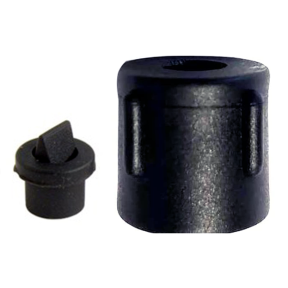
Common indicators that a vented loop needs attention include external water leakage from the vent cap or a persistent whistling or "hissing" sound during pump operation. Maintenance typically involves removing the cap to clean salt deposits or debris from the internal one-way valve (duckbill or flapper) and ensuring the rubber components remain flexible and are not sticking.
Can a vented loop be used on an engine's raw water cooling system?
Yes, vented loops are essential for raw water cooling circuits to prevent water from siphoning through the intake, filling the muffler, and back-flooding into the engine cylinders when the motor is stopped. This protection is vital for preventing catastrophic engine damage caused by water backflow.
How does the one-way valve inside the vent cap function?
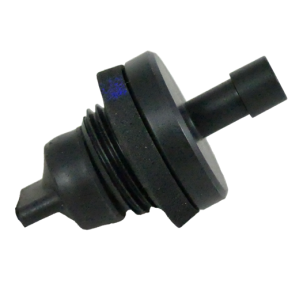
The internal valve (often a duckbill style) is designed to stay closed when fluid is being actively pushed through the loop by a pump, preventing water from leaking out. When the pump stops and a vacuum begins to form, the valve opens to allow atmospheric air into the line, which breaks the siphon and allows the water to drop back down on both sides of the loop.