Marine Battery Basics

Crucial Marine Battery Takeaways for Boat Owners
- Distinct Design: Marine batteries differ from car batteries because they feature thicker plates built to withstand heavy vibrations and harsh saltwater environments.
- Application Specifics: Boaters rely on three main configurations: Starter batteries for rapid engine cranking, Deep Cycle batteries (house banks) for sustaining onboard appliances, and Dual Purpose batteries for space-restricted vessels requiring both functions.
- Diverse Battery Technologies:
- Flooded Lead Acid: Highly affordable and widely available, but requires consistent fluid top-offs and upright, well-ventilated installation.
- Gel Cell: Maintenance-free, spill-proof, and exceptionally shock-resistant, but requires careful charging to protect its cycle life.
- Absorbed Glass Mat (AGM): Delivers fast recharges and durable deep discharging without leakage, though it is highly sensitive to overcharging.
- LiFePo4 (Lithium-Ion Phosphate): Offers up to 70% lighter weight, a 100% depth of discharge, and 3x longer lifecycles, but carries a premium price tag and demands professional installation.
- Strict Winterization Protocols: While traditional lead-acid, AGM, and Gel options should be stored fully charged to prevent freezing and sulfation, LiFePo4 batteries must be stored disconnected at a 50–60% charge state and never charged in freezing temperatures.
- Mandatory Group Replacements: When a single battery fails within a bank, all connected batteries must be replaced simultaneously with identical units from the same manufacturer and production date to maintain charging compatibility and prevent premature failure.
Understanding marine batteries and their use is a very important part of boating. Marine batteries are necessary to start your boat and to run all the electrical devices on board that help make boating easier and more fun. In this article, we start with the basics of batteries and then explore the different applications of batteries used on boats.
What is a boat battery, and how is it different from a normal car battery?
A marine battery is unique in that it is specifically designed to power the electrical systems on a boat. It stores chemical energy, which is then converted into electrical energy when required. The electrical energy generated powers different components of the boat, such as navigation systems, lights, and other electronics onboard.
It's important to note that marine batteries are different from car batteries because they are designed to handle the harsh marine environment and the constant vibration of the boat. They also have thicker plates that better withstand deep cycling than versions made for cars. Proper maintenance of your marine batteries are crucial for their longevity and performance. This includes regular charging and cleaning to prevent corrosion and other damages caused by exposure to saltwater or extreme temperatures. It's recommended to follow manufacturer guidelines for maintenance and replacement schedules to ensure optimal performance.
Battery Applications - What type to use for specific accessories
There are three types of batteries for boats:
Starter– These marine batteries are used for starting your engine – though on many boats, they are wired in such a way that they can be combined with your house bank in an emergency. Marine starting batteries (also called cranking batteries) have thinner plates with greater surface area to give a fast current surge (between 75-400 amperes, for 5-15 seconds) for cranking an engine. They are capable of being quickly recharged by your engine's alternator but are not meant to maintain a high power output for long periods, so deeper discharges will decrease the lifespan of these batteries. This is why they are typically not used for anything other than starting your engine. Starter batteries list their Marine Cranking Amps (MCA) or Cold Cranking Amps (CCA) to indicate their starting power – so make sure you always have more cranking amps than your engine manual calls for in your motor battery.
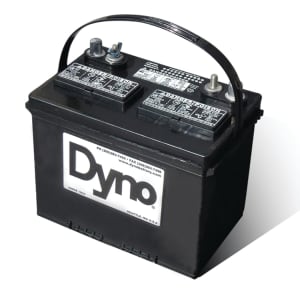
Deep Cycle – These are used to run everything else on your boat that requires power – be it your refrigerator, your stereo, lights, or your instruments while cruising – and are usually referred to as your “house bank”. These batteries are where the majority of your energy onboard is stored – a little like a savings account. Deep cycle are constructed with thicker, heavier plates that can be discharged more deeply over longer periods of time offering more reliable marine power. In general, your bank should have at least 3-4 times the amount of energy (amp hours) you think you may require between charge cycles so that you are usually only using about 25% of the potential energy stored.
Dual Purpose – Based on the name, it's probably obvious that these fall somewhere between the other two types. They are best used in small boat applications where you will only have one battery on board (instead of two separate banks) – usually because space is an issue and you need the best of both worlds in one battery.
Types of Marine Batteries: Flooded, AGM, Gel and LiFePo4
Flooded Lead Acid Batteries – These are the most "traditional", popular, and affordable type of heavy-duty marine batteries. They are available as starting, deep-cycle or dual-purpose batteries in a variety of sizes. Lead acid batteries use a reservoir of liquid sulfuric acid between their lead plates that produces hydrogen and oxygen when the battery is being charged. Because of the hydrogen, the batteries must be vented to allow the gas to escape safely. Without this, they will overheat and boil over – so you must ensure these batteries have adequate space for ventilation. Flooded batteries also need their liquid electrolytes (distilled water) topped up regularly, so it's very important to make sure they are easily accessible and that they are only installed in the upright position so there is no chance of the acid spilling out. Flooded lead acid batteries have been in use for over 100 years, and have a great track record on boats – offering the best price for the budget conscious cruiser, but they do take more maintenance than other battery types.
| Pros | Cons |
|---|---|
| Least expensive option of all the battery types | Must remain upright or the acid can spill out |
| Can last a long time if well maintained | Need good ventilation |
| 98% recyclable | More maintenance to top up liquid electrolyte solution |
| Easy to find and purchase all over the world | Cannot be installed near sensitive electronics |
| Handle overcharging better than most battery types | Higher self-discharge rate (6-7% per month) than other batteries |
Gel Cell Batteries – Unlike traditional lead-acid batteries, these batteries have a thixotropic gel-like substance that permanently locks the electrolyte into this matrix, reducing movement and flow inside the battery case. They are sealed, spill-proof, and maintenance-free, making them a hassle-free power source.
One key benefit is their exceptional cycle life, providing up to three to four times the lifespan of standard AGM or flooded batteries – so while they can be more expensive, they are cost-effective over the cycle life of the battery. Additionally, gel batteries boast a higher depth of discharge, allowing you to utilize up to 80% of their capacity without damage, though it’s better to stay between 30% to 50% for maximum cycle life.
Their resistance to vibration and shock makes them ideal for the marine environment, ensuring durability even in rough waters. Gel batteries also function well in a wide range of temperatures, from hot tropical climates to freezing regions, maintaining consistent performance. Moreover, they recharge faster than AGM and flooded batteries, offering quick turnaround times for marine enthusiasts needing rapid power replenishment between adventures. But beware of deeply discharging them too often as this will greatly reduce their overall cycle life – they do much better (and will recharge faster) if you don’t discharge them below 50%.
| Pros | Cons |
|---|---|
| Sealed, no-maintenance design | Higher cost compared to flooded or AGM batteries |
| Longer cycle life than flooded batteries | Susceptible to damage from high temperatures |
| Better tolerance for deep discharges | Not ideal for engine starting purposes |
| Spill-proof, mountable in any position | Slower recharge rate if discharged below 50% |
| Low 3% monthly discharge rate | Regular deep dicharges (>50%) can potentially halve their cycle life |
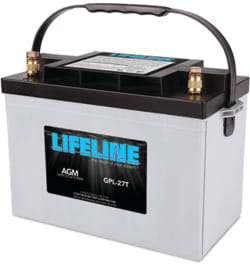
Absorbed Glass Mat (AGM) – batteries are also sealed, so they are virtually maintenance free and don't have the same ventilation requirements as flooded batteries. In addition, they are highly resistant to shock and vibration - a great quality in the marine environment.
While technically a type of wet cell, in absorbed glass mat batteries, the positive and negative plates are separated by an absorbent fiberglass mat that holds the acid electrolyte like a sponge. This glass mat separator minimizes the potential for electrolyte spillage. During the charging process, these batteries have internal pressure valves that allow the oxygen from the positive plates to move to the negative plate, where they recombine with hydrogen, producing the water that the battery needs – so there is no need to top up!
AGM batteries can be taken down to 50% without damage and they excel at handling deep discharges over and over – making them a great option for cruisers who need reliability and durability. They also recharge efficiently – so they are great for a house battery bank, where they may be called upon to deliver steady, long-term power.
| Pros | Cons |
|---|---|
| Maintenance free | Require a “smart” charger |
| Greater charge currents – so can use as a starter if needed | Sensitive to overcharging (keep under 14.4 volts) |
| Greater charge acceptance (up to 40% of capacity) so quicker recharge | Shorter life cycle in deep cycle applications than Gel or Flooded |
| Only a 3% discharge rate | Overcharging greatly reduces battery life so may not last as long |
| Resistant to vibration, spill-proof, leak-proof and submersible | Cost less than LiFePo4, but more expensive than Flooded |
LiFePo4 (LFP or Lithium-Ion Phosphate) – Even though it has a much higher price tag, this type of battery is gaining in popularity. Not to be confused with Lithium batteries (like the ones used in cell phones), LiFePO4 batteries use different materials and are far more stable (i.e., safe) – making them highly suited to boating applications. LiFePO4 batteries are sealed, can be installed in any position, and can withstand a much higher temperature range than other batteries without any performance loss.
LiFePo4 batteries are significantly lighter while offering up to 3 times the life cycles – so they last longer and take up less space than other battery types. They can also take a far lower depth of discharge (up to 100% vs. 50%) and accept much higher charging amperage than traditional AGM or flooded batteries – which means they re-charge in a fraction of the time. This means you can use up to 100% of the battery capacity without longtime damage and still recharge them faster than any other battery – a big plus.
Despite a higher price per amp hour, many boaters are transitioning to these LiFePO4 batteries because of all these significant benefits. So, what's the downside? They are particularly sensitive to charging requirements and need a much more complicated installation and thus are not easy to install for the typical DIY boater. It is important to ensure that the installation meets safety standards so it’s best to contract with a professional installer. For more information on this specific type of battery, read The Power of Lithium Batteries: Benefits Uncovered.
| Pros | Cons |
|---|---|
| Up to 70% lighter | Expensive |
| Higher depth of discharge (up to 100% vs. 50%) | Need integrated BMS |
| Higher life cycles (up to 3X) = longer life | Must have charger capable of charging lithium batteries |
| Up to 70% smaller footprint | Best not to charge below freezing (0°C or 32°F) |
| Significantly faster recharge | Not usually suited as a start or bow/stern thruster battery |
| Consistent voltage during high loads | Needs a professional installer - not DIY |
| Lower self-discharge than other battery types | |
| Operates within wider temperature ranges (–20°C to 60°C) | |
| Isn't damaged by extended time at high discharge |
Charging a Marine Battery to Increase Longevity
Sometimes, thinking about batteries like money in the bank is helpful. If you keep taking money out, there will soon be no money left when you need it the most. Batteries are similar in that there is a limited amount of energy (measured in amps), so we need to add amps back in or risk not having any left when we need them.
Charging is an important aspect of their maintenance. It's recommended to use a marine-grade battery charger that is specifically designed for your type of battery. This will ensure the battery is charged correctly, prolonging its lifespan. When charging, make sure to follow the manufacturer's instructions and safety guidelines. Avoid overcharging or undercharging the battery, as this can damage it or decrease its performance. Make it a habit to regularly check the battery voltage and charge status to ensure it is where is should be. For more information, read Charging a Marine Battery.
Marine Battery Storage - How to store your RV or marine batteries
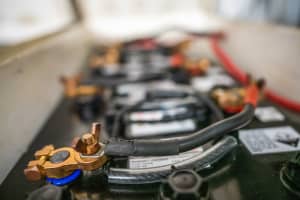
Marine battery storage is an essential aspect of boating and marine life. Properly storing your boat's batteries when not in use can prolong their lifespan, prevent damage, and improve their overall performance. One of the most important things to do is make sure the batteries are fully charged before being put away (with the exception of LiFePo4). A low state of charge can cause sulfation and permanent capacity loss, so top them up before winterizing the boat. Another great option for winterization is to hook the batteries up to a small solar panel to trickle charge over the winter - but make sure you are also using the appropriate charge controller/MPPT configurations to prevent overcharging. For specific information by battery type, refer to the table below.
| Battery Type | Winterization in Cold Climate | Key Actions if Not Charging | Risks if Not Charging | Temperature Considerations |
|---|---|---|---|---|
| Flooded | Remove (if possible) and store above 32°F (0°C) in a ventalated area. Top up water and keep fully charged. Check monthly. | Fully charge before disconnecting. Recharge if voltage drops below 12.4V. Never let voltage drop below 12.0V. | High risk of sulfation and freezing if voltage drops below 12.4V. | Store above 32°F (0°C) ideally, though they can tolerate down to about -4°F (-20°C) if fully charged. |
| AGM | Keep onboard and charged. Check monthly. | Fully charge before disconnecting. Check monthly and recharge if needed. | Low risk - slower self-discharge, but can still drop below safe limits, so monitor monthly. | Store above 32°F (0°C) ideally, though they can tolerate down to about -4°F (-20°C) if fully charged. |
| GEL | Keep onboard and charged. Check monthly. | Fully charge before disconnecting. Check monthly and recharge if needed. Avoid freezing temperatures if possible. | Low risk, but gel is sensitive to freezing when voltage is low, so monitor monthly and charge if needed. | Store above 32°F (0°C) ideally, though they can tolerate down to about -4°F (-20°C) if fully charged. |
| LiFePo4 | Keep onboard and hooked up to BMS. If temperature below 32°F (0°C) is expected, disconnect charging until temperature rises above 32°F (0°C). | Charge to ~50–60% (not 100%) and then disconnect. Store above 14°F (-10°C) and ensure the BMS is off or in sleep mode. Recharge if voltage drops below 13V. | High risk - permanent damage if charged below 0°C or over-discharged without recharging, so monitor monthly. | Do not charge below 32°F (0°C) unless it has low-temp charging protection. Discharging is usually fine to -4°F (-20°C), but charging in the cold can destroy the cells. |
Frequently Asked Questions
How do I choose the right size and type?
Selecting the appropriate battery size and type for your boat requires careful consideration of several factors, including the battery's capacity, voltage requirements, and the electrical demands of your boat's onboard accessories. To ensure that you make an informed decision, we recommend you speak to a marine battery specialist who can provide guidance specific to your vessel's needs. Factors such as usage frequency and charging time should also be taken into account when selecting a battery to ensure optimal performance and longevity. Choosing the right battery is essential for ensuring that your boat's electrical system runs smoothly and reliably, allowing you to enjoy your time on the water without any technical difficulties. For more information on battery sizing, read Sizing Your Battery Bank.
What does CCA and MCA mean?
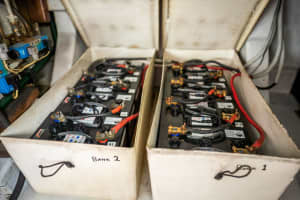
CCA stands for Cold Cranking Amps, which is a measure of a battery's starting power in cold temperatures. It indicates the number of amps a battery can deliver at 0 degrees Fahrenheit for 30 seconds while maintaining a voltage of at least 7.2 volts. MCA, on the other hand, stands for Marine Cranking Amps and is a measure of a battery's starting power in marine environments. MCA measures the number of amps that a battery can deliver at 32 degrees Fahrenheit for 30 seconds while maintaining a voltage of at least 7.2 volts. Both CCA and MCA are important factors to consider when choosing the right starting battery for your boat.
How long does a marine battery last before needing replacement?
The lifespan can vary depending on the quality, the battery type, the frequency of use, cycle life, and maintenance. With average usage, most marine batteries will last 2-5 years assuming they are well maintained and not being abused.
If one battery dies, do I have to replace all of them?
Yes - absolutely. When buying a new battery, it's imperative that you not only purchase the same type of batteries (Flooded, Gel, AGM, or LiFePO4), but that they are made by the same company and manufactured around the same date. It's never a good idea to combine batteries that have different "birthdays". If you do – the older battery will often negatively affect the performance of the newer batteries.
If I buy new batteries, do they all have to be the same type?
Having the same type/manufacturer of batteries is also critical, as all batteries use different charge profiles (determined by their manufacturer) – so they cannot be connected to other types/manufacturers of batteries and still be charged correctly. It's important to consider all of your needs onboard before making your choice.
Are bigger batteries better?
First - let's clarify that "bigger" can refer to how many amps a battery has, or it can refer to the actual size of it. The more amps you have - the more power you have to run various accessories onboard. The more physical space you have, the more options you will have on what size batteries to install. So the answer to both is that it will completely depend on the boat itself and the demands you are going to place on it. The easy answer is that you should get the maximum amount of amps you can install in the amount of space it will take up (or that your budget can afford). But keep in mind that batteries are heavy, so the more of them you add, the more weight you're adding to your boat. It's up to you to decide if the extra weight will be offset by the creature comforts the extra amps will provide.
We hope this article has helped you understand batteries and the job they perform on your boat. If you have further questions, please don't hesitate to contact our battery experts at (800) 426-6930.